
FROM OUR RESEARCH DESK
Ideas worth understanding.
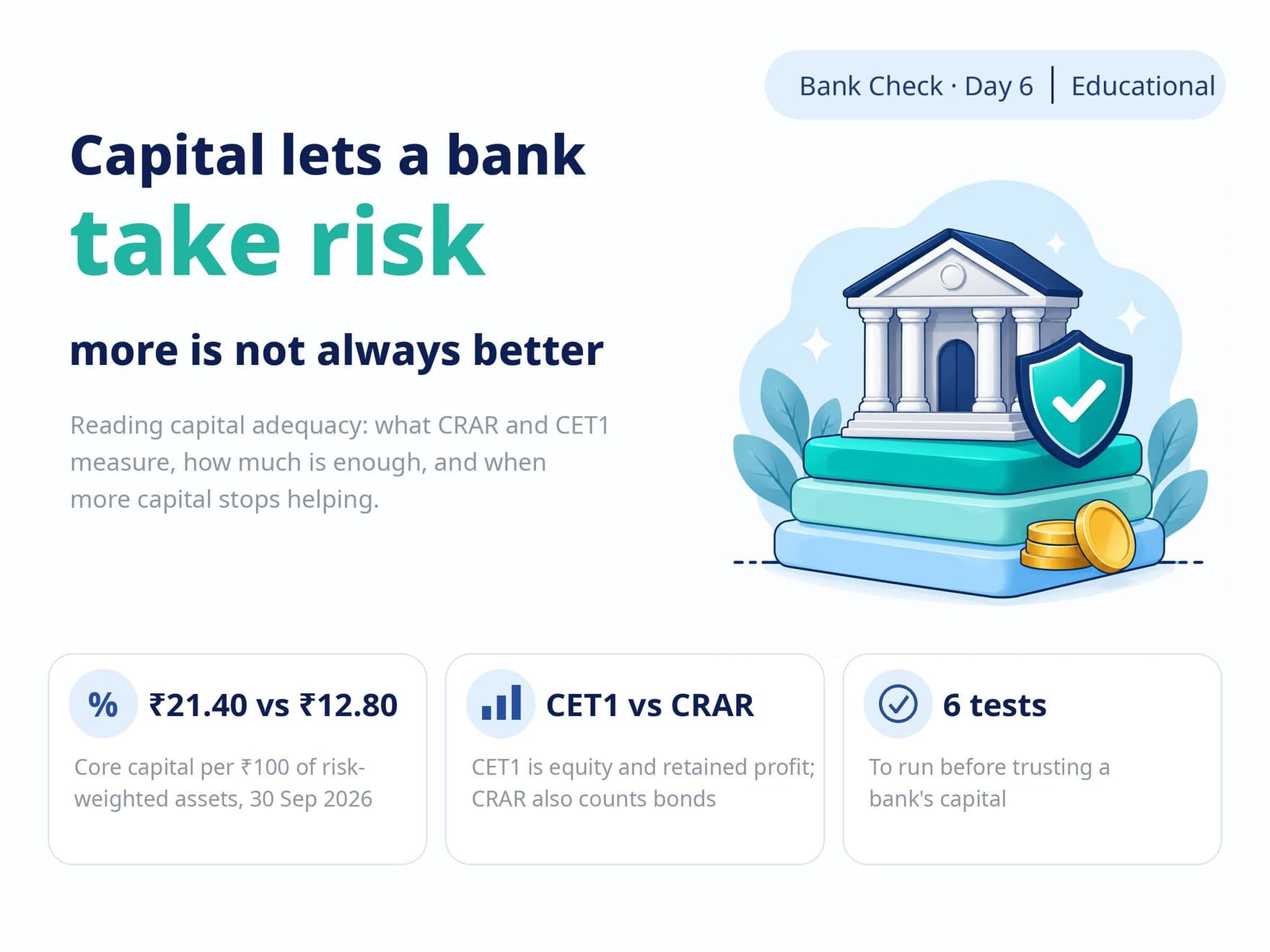
How to Read a Bank's Capital Adequacy (Bank Check, Day 6)
The final part of Bank Check covers CRAR, CET1 capital, RBI minimums, September 2026 bank comparisons, and the impact of the April 2027 loan-loss rules.
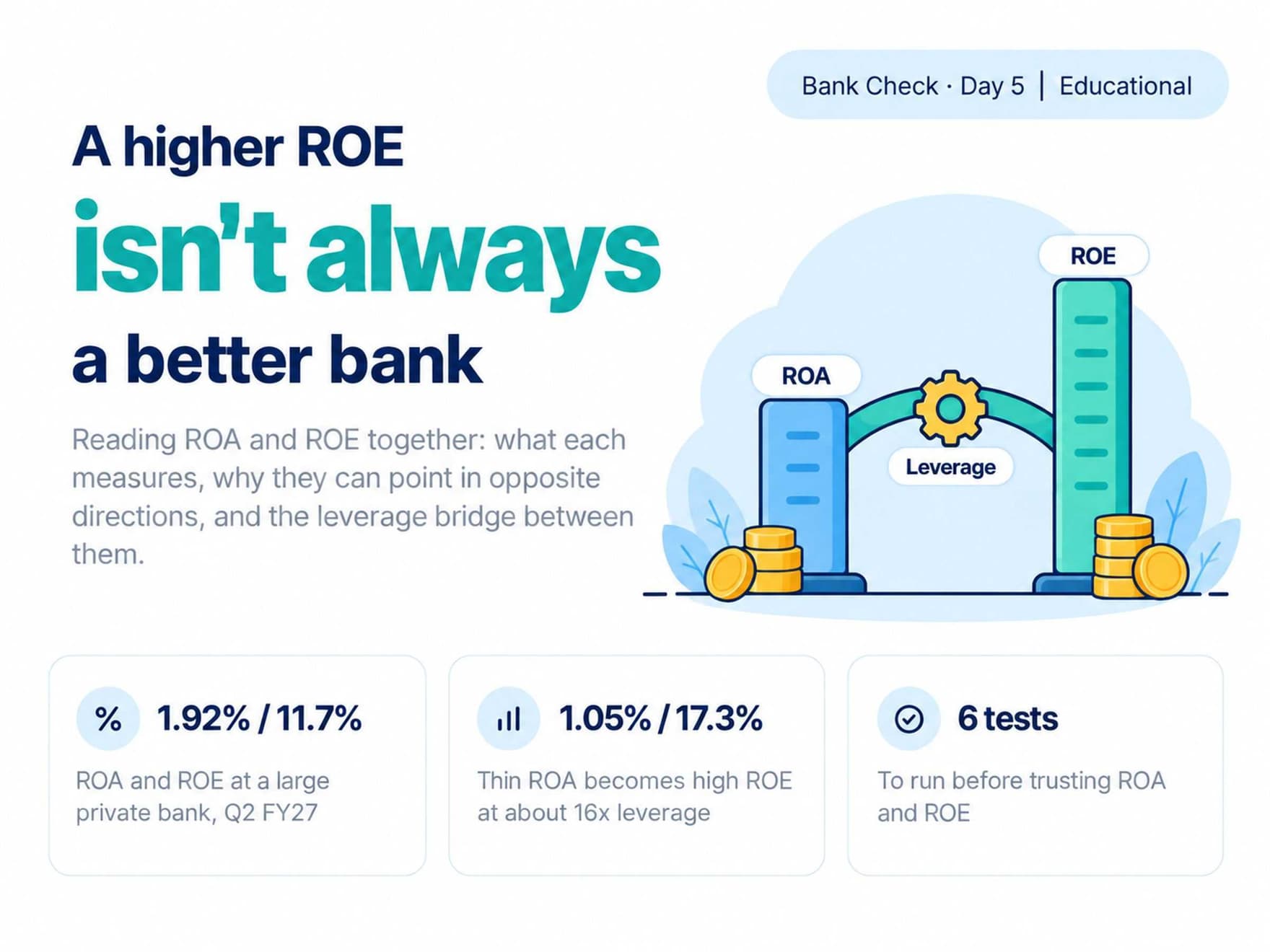
How to Read a Bank's ROA and ROE (Bank Check, Day 5)
Learn how to read a bank's ROA and ROE, why leverage pulls them apart, and how public sector, private and small finance banks compare in Q2 FY27.
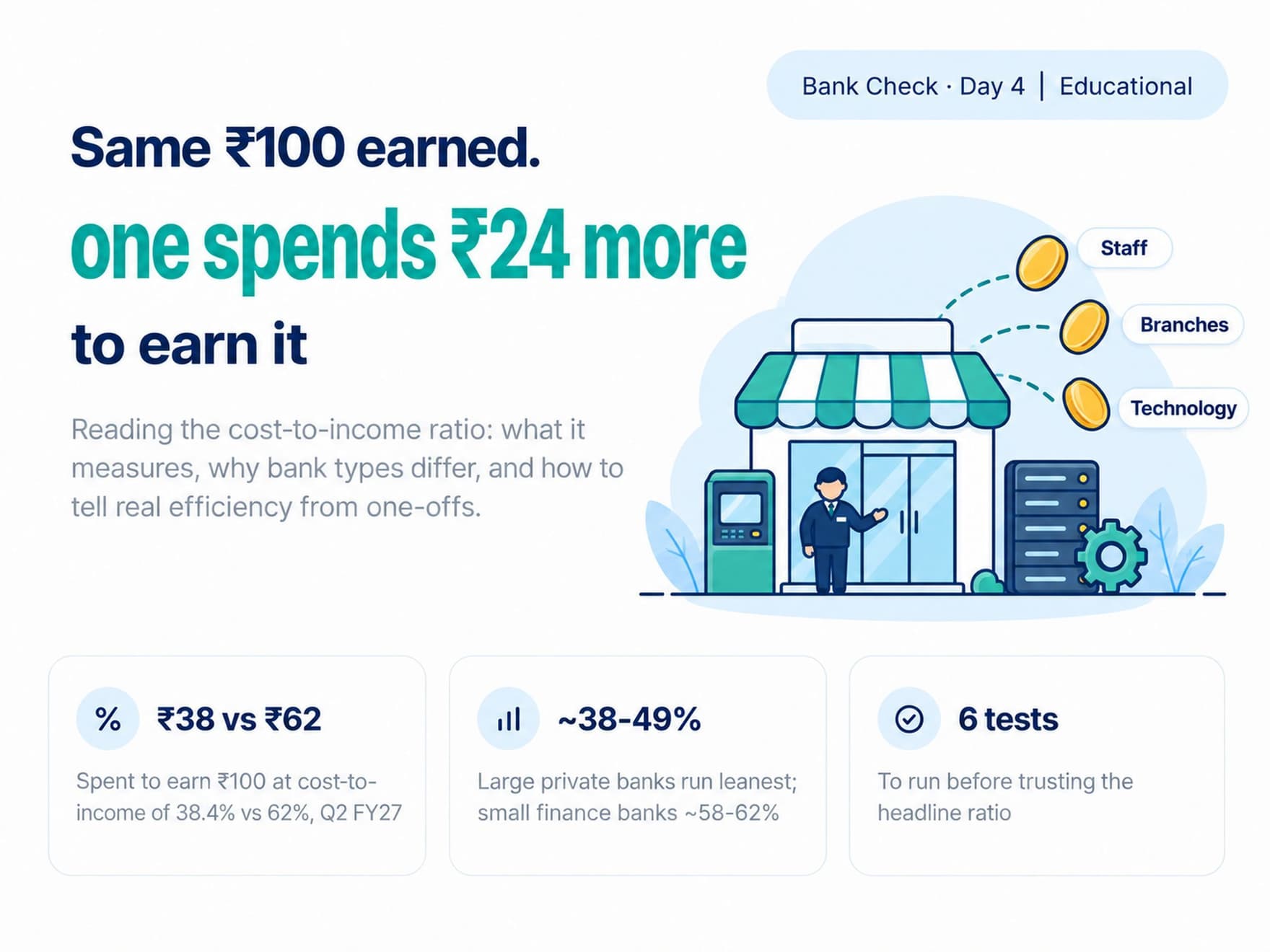
How to Read a Bank's Cost-to-Income Ratio (Bank Check, Day 4)
Two banks earn the same ₹100. One spends ₹38, the other ₹62. Bank Check Day 4 explores what cost-to-income reveals, and why a lower ratio doesn't always mean a better bank.
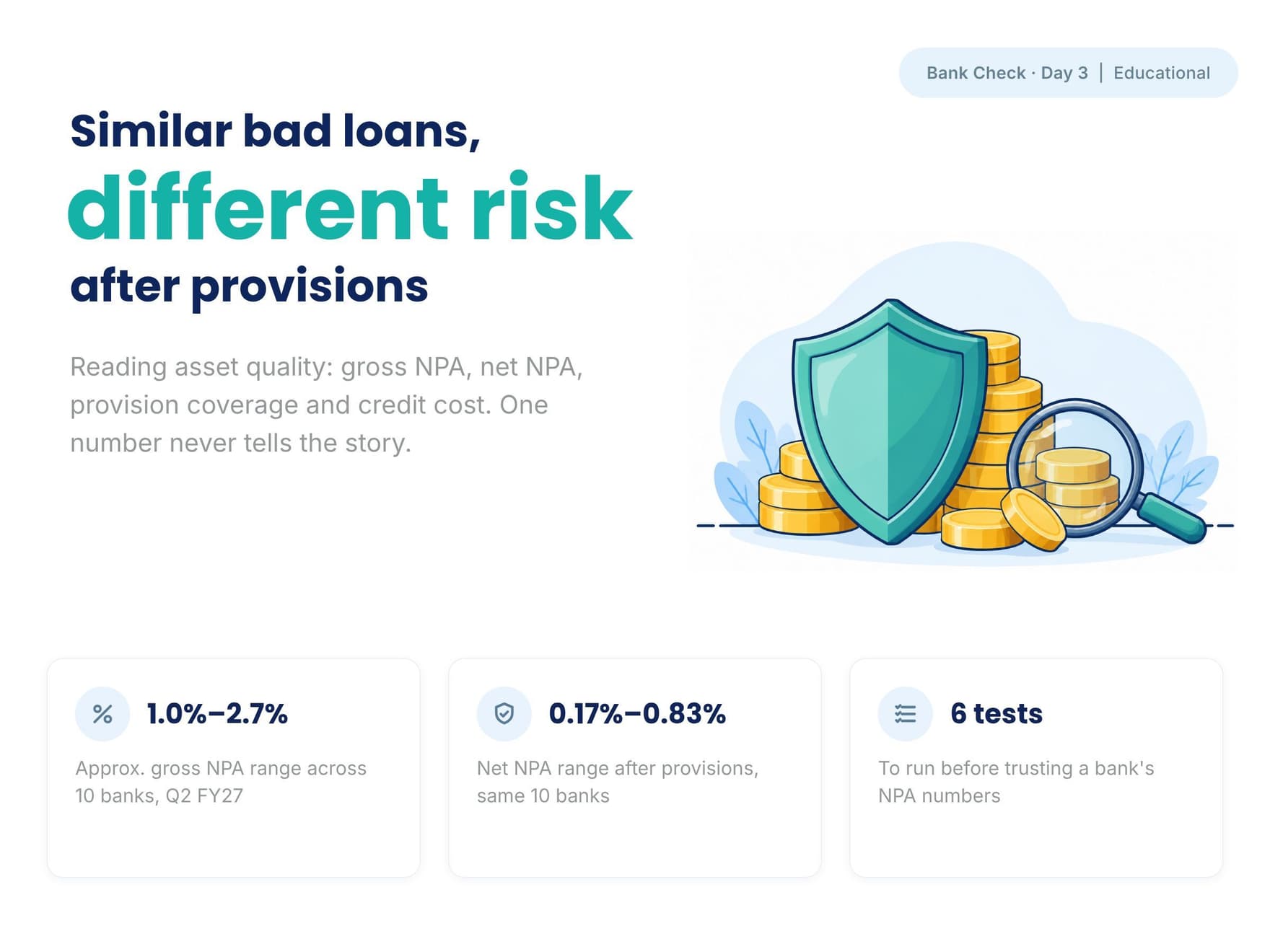
How to Read a Bank's Asset Quality
Same gross bad loans, three times the leftover risk. Bank Check Day 3: how to read gross NPA, net NPA, provision coverage and credit cost together, and the six tests that keep one number from misleading you.
- #Bank Analysis
- #Investor education

CASA Ratio Of Banks: Meaning, Link To NIM And Comparison
The CASA ratio shows how much of a bank’s deposits come cheap, yet in Q2 FY27 small finance banks with the lowest ratios earned the widest margins, because lending rates and bad loans matter too.
- #Bank Analysis
- #Investor education
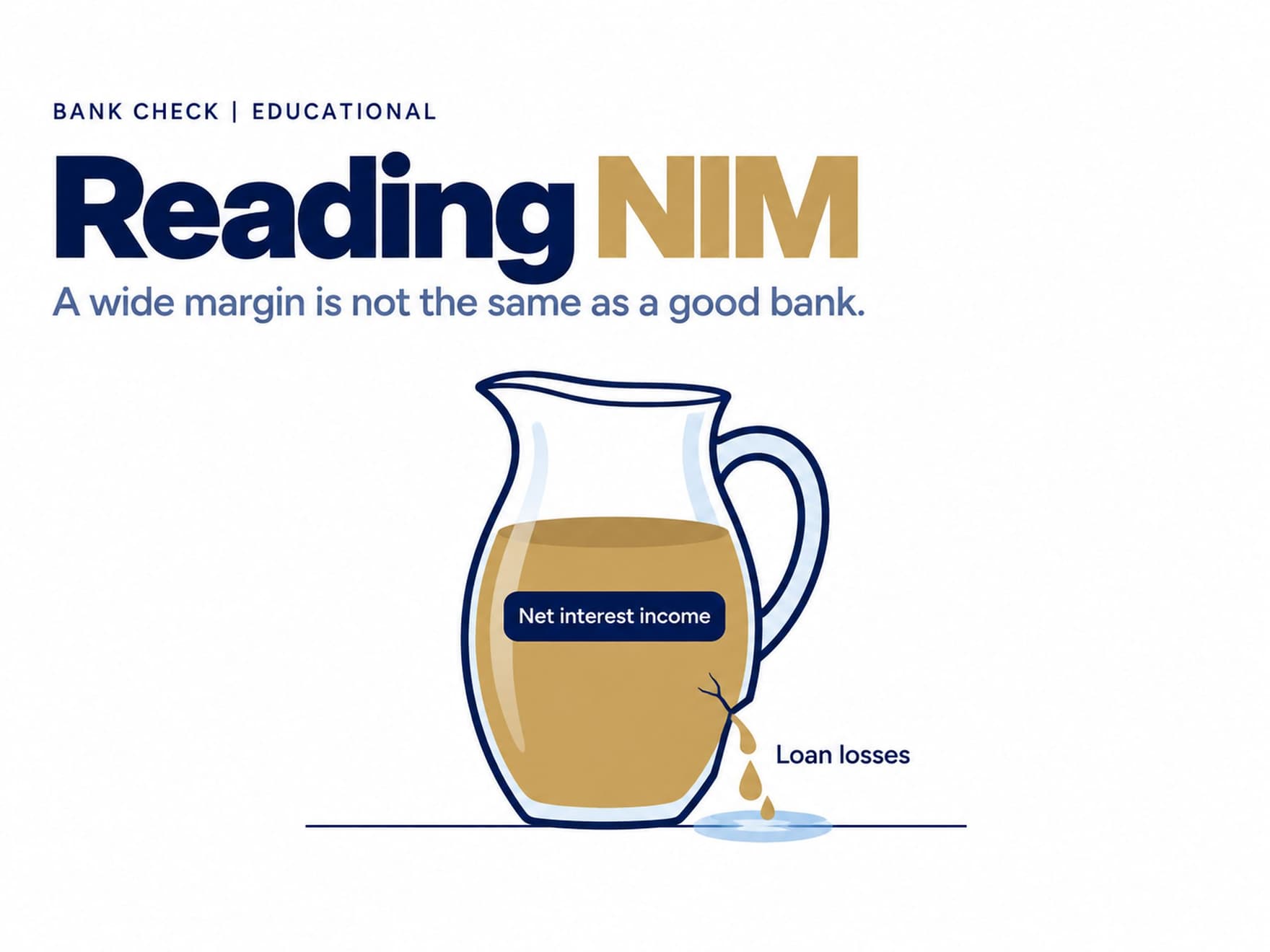
Net Interest Margin (NIM) Of Banks: Meaning And Six Checks
Net interest margin shows what a bank earns on every ₹100 it lends, but a wide margin can be paid for in bad loans.
- #Bank Analysis
- #Investor education
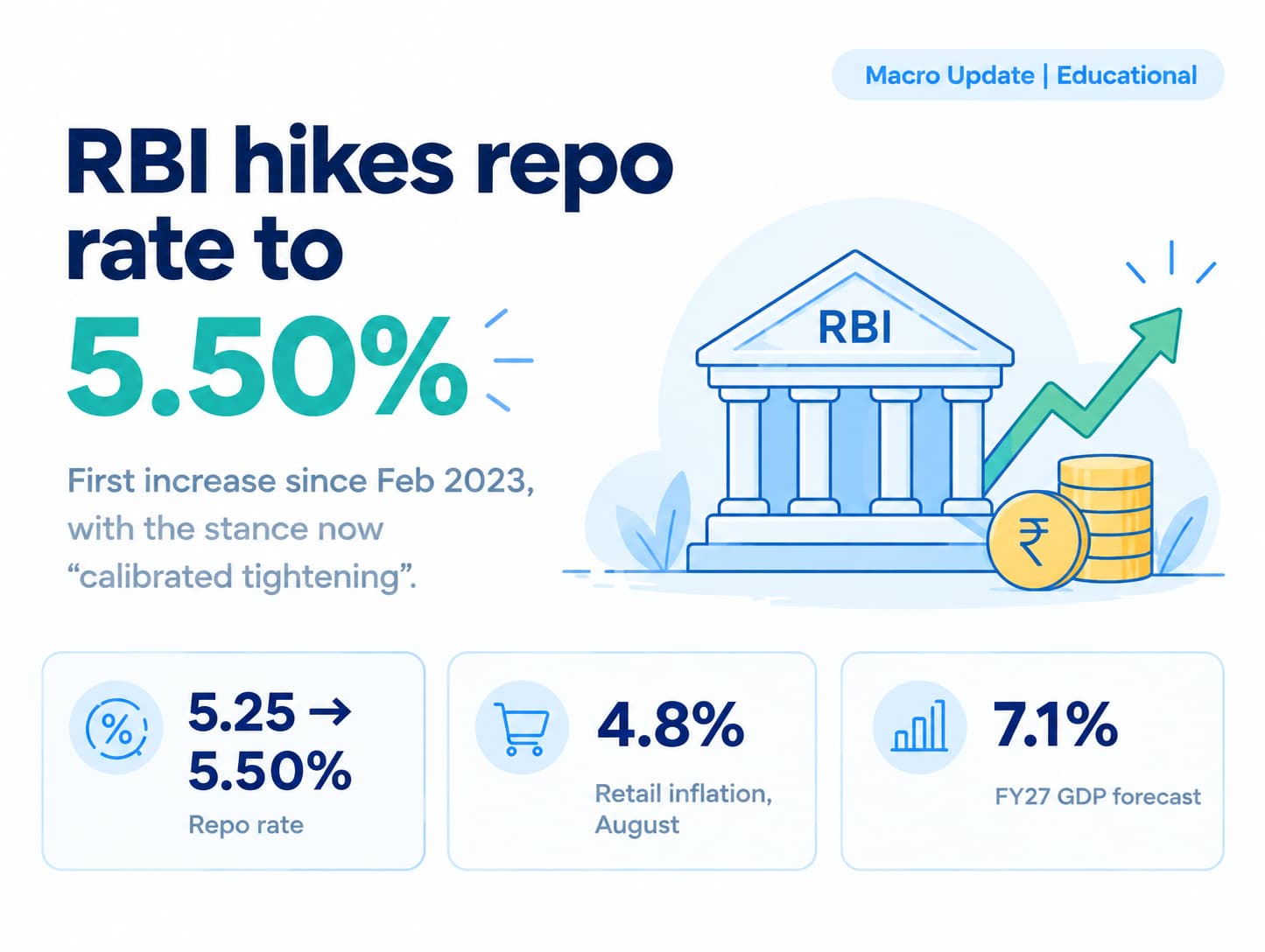
RBI raised the repo rate, what it means & what to keep a watch on?
The RBI has raised the repo rate by 25 bps to 5.50%, its first hike since February 2023, and changed its stance to "calibrated tightening". Here is what drove the move, who it affects and which dates to watch.
- #RBI policy
- #News update

What Makes a Strong Long-Term Business
Build a strong long-term business by focusing on sustainable growth, customer trust, and lasting value.

Reading Market Trends with Context
Understand market trends by looking beyond the numbers and focusing on broader patterns.
You Were Correct About the Company. So Why Did the Stock Drop?
Understanding market movements through structured analysis, relevant signals and a broader market perspective.
